The CMO-CEO relationship—what’s working and where CMOs need to improve

By: Adrianne Pasquarelli

The CMO-CEO relationship is improving but gaps remain, according to a new study. (Getty Images)
More CEOs consider their chief marketing officers to be loyal—that’s the good news. But the bad news is that the majority of those same CEOs are giving their CMOs lower grades on overall performance and fewer marketing departments are seen as a profit center, according to a new study.
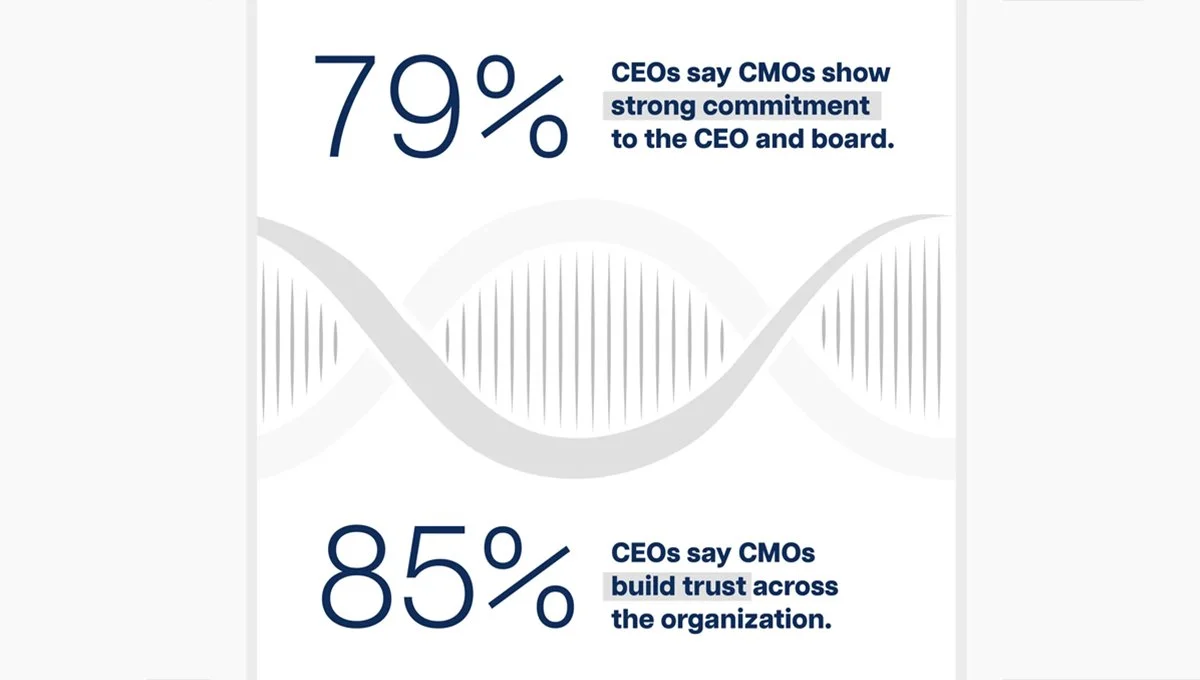
Seventy-one percent of CEOs now believe CMOs prioritize CEO interests over their own, up from 55% last year, according to Boathouse, an independent marketing agency, which publishes the study on an annual basis. Boathouse surveyed 150 CEOs from top U.S. companies earlier this year.
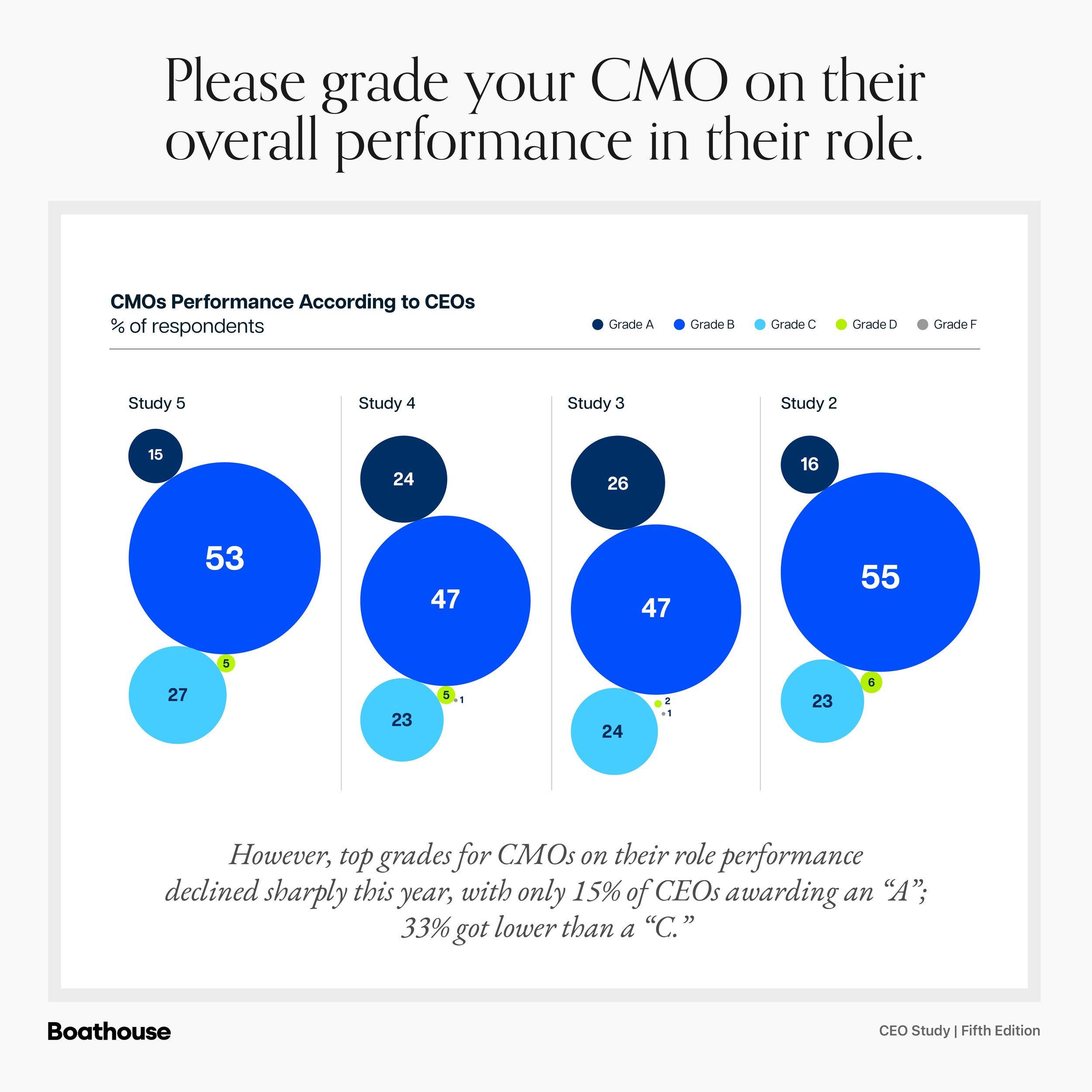
Boathouse found that only 15% of CEOs gave their CMOs an “A” on performance, down from 24% in 2025. The majority, or 53%, of CEOs gave CMOs a “B” grade, up from the 47% of CEOs who gave a “B” last year, with 27% earning a C and 5% getting a D; last year, 23% gave out Cs and 6% gave a D or lower.
But even as CMOs earn lower marks, the improved relationship between the CEO and CMO documented in the study will be critical as companies look to future growth, according to John Connors, founder and CEO of Boathouse.
“If you have a good relationship with the CEO, you can fix performance issues,” he said, noting that previous surveys showed CMOs are only interested in covering their own interests.
The shift to be more of an asset for company leadership is a positive one, Connors added. “CMOs got smart about survival … they realized ‘I’d better build a good relationship to survive’ and now they have to crack growth in different ways,” Connors said.
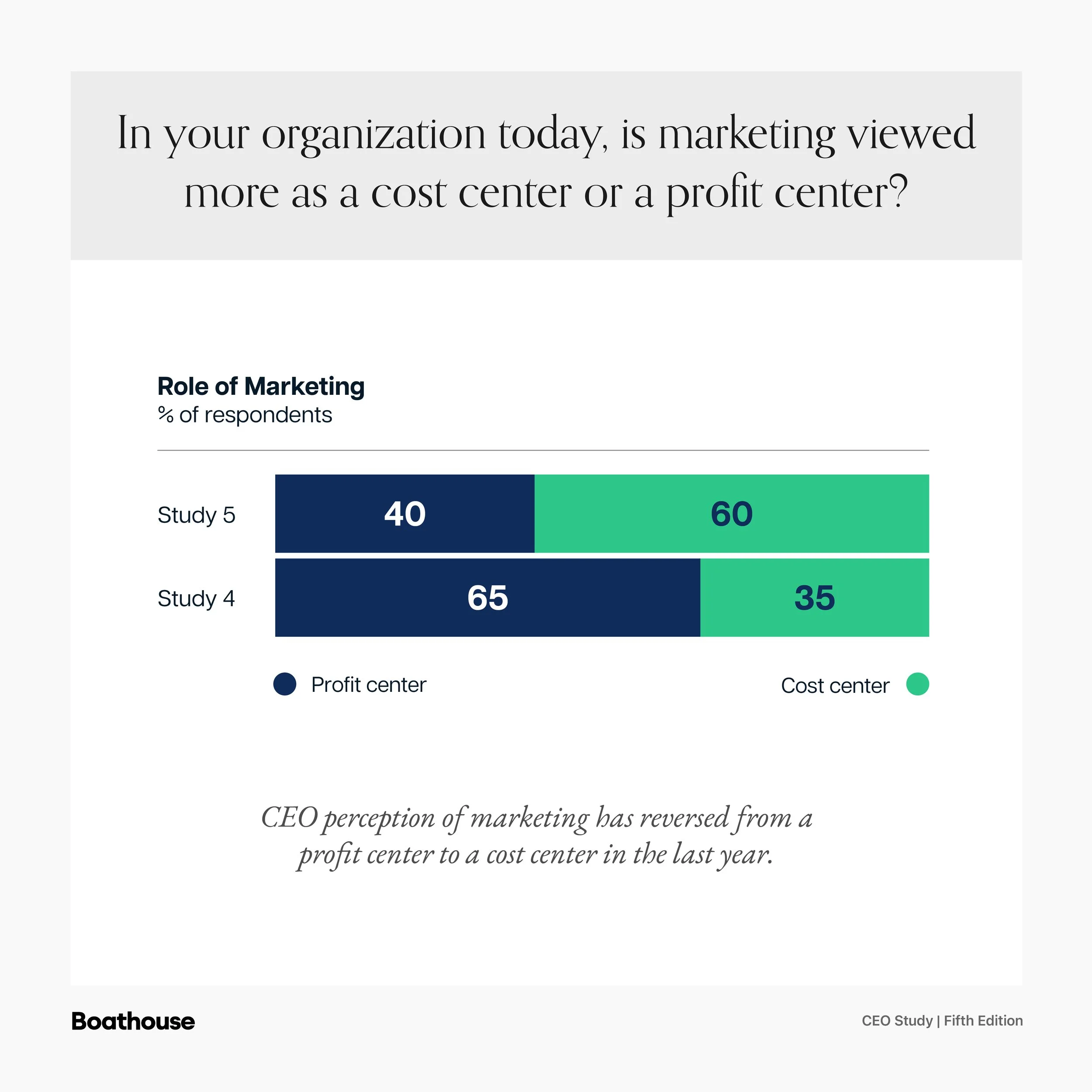
The study also found a decline in CEO perception of marketing as a profit center. This year, 40% of CEOs found marketing to be a profit center; 60% found it to be a cost center. The figures were nearly reversed last year, with 65% of CEOs saying marketing drove profit and 35% said it drove costs.
“Marketing is losing credibility on driving top-line growth for the company,” said Connors. “They make a great case on marketing ROI, but as it relates to predictably driving business overall growth, there’s a gap.”
He noted, however, that AI could help provide a solution. As CEOs look for growth, marketers should be using AI as a tool to help them get there. For example, AI could help CMOs look horizontally at other data sets within an organization rather than just looking at the silo of marketing data, Connors noted.
“There’s a lot of momentum under the smokescreen of AI for CMOs to connect more data and drive more growth through that,” he said. “You can push on different parts of the C-suite and collaborate more.”
More Insights