How CEOs view CMOs

ORIGINALLY PUBLISHED In Smartbrief
By: Mike Driehorst
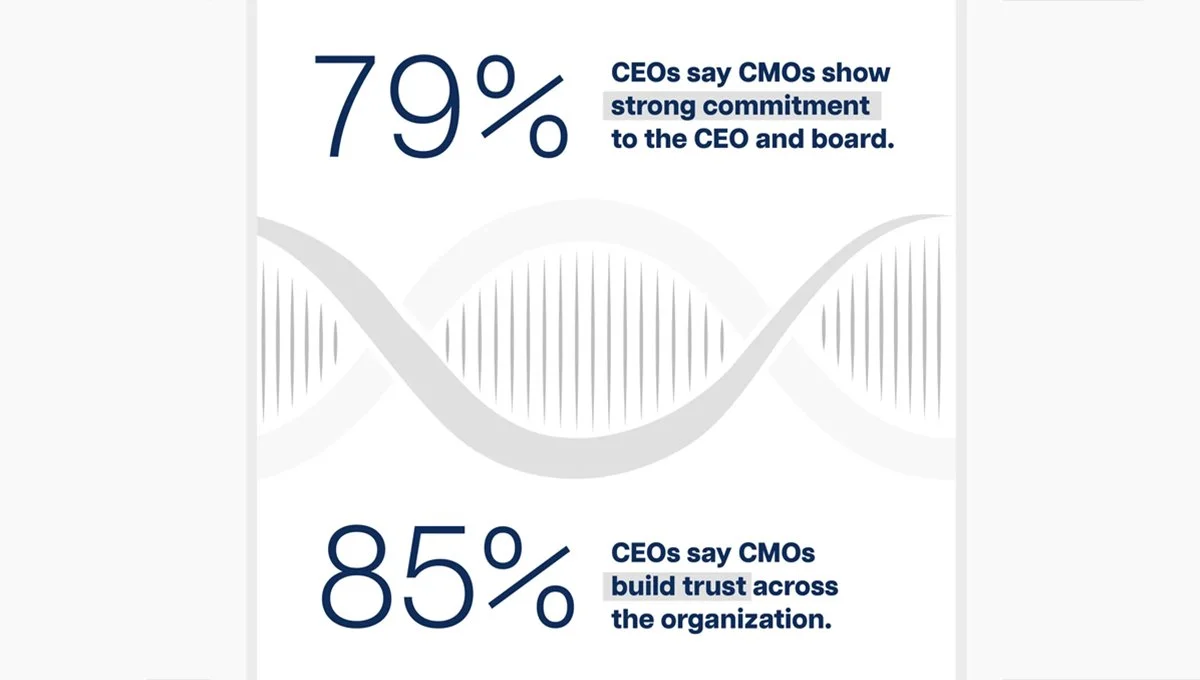
CEOs' views of CMOs continue to be more about execution than strategy, per Boathouse’s annual CEO survey, and while trust and alignment between CEOs and CMOs are strong, CEOs still want more business results.
Boathouse agency released its fifth annual CEO study today, looking at how CEOs view the chief marketing officer role. Study results are based on feedback from 150 CEOs of top US companies, representing a good blend of private and public companies across 16 industries. Healthcare, technology and banking/finance/insurance are the most represented sectors.
SmartBrief had the chance to dive into the results with Sonia Chung, chief strategy officer at Boathouse. Following the Q&A are some key points from the study results.
What is the biggest surprise in the survey results?
Sonia Chung: For me, the biggest surprise is that the CMO role remains tilted toward execution over strategy, especially given that marketing has always been accountable to drive growth, represent the consumer and lead brand and storytelling for the organization. These are highly strategic areas for any organization.
The CMO self-interest vs CEO’s interest has fluctuated over the years and is nearly opposite from the first one. Why is that?
Chung: The reversal reflects both a shift in the role and in expectations. As CMOs have taken on greater accountability for growth, there’s been a clear move toward tighter alignment with CEO priorities and stronger partnership at the leadership level. What stands out in this year’s data is that the relationship itself is no longer the issue, CMOs are now deeply embedded in the business. The challenge has shifted from alignment to demonstrating impact.
The top grades CEOs gave their CMOs this year were lower than in the previous two years. Why is that? How can CMOs reverse those scores?
Chung: The drop in top ratings reflects a gap between rising expectations and delivery. CEOs are looking for growth, financial accountability and measurable impact, but many CMOs are still speaking in marketing terms rather than business outcomes.
To reverse this, CMOs need to more clearly connect their work to revenue and growth, while strengthening execution, innovation and their ability to integrate AI and advanced capabilities.
While relationships and alignment have improved, they’re not enough on their own; performance is now being judged on results.
Trust this year versus the previous year remained steady and has significantly grown since the first study. What have CMOs consistently done to gain that trust from their CEOs? What more can they do?
Chung: Trust has remained steady this year and has grown significantly over time, largely because the CEO–CMO relationship is stronger than ever. CMOs are more aligned with leadership priorities, more embedded in the business and more effective at building cross-functional relationships.
They’ve also made progress in speaking the language of the C-suite, which has helped reinforce credibility and trust.
To build on that trust, CMOs need to go further in connecting their role as the voice of the customer to tangible business outcomes. That means more clearly linking customer insights, customer growth, increasing customer value, brand efforts and marketing activity to financial results and broader organizational performance.
Do you have any other key takeaways from the study that CMOs should pay attention to?
Chung: Marketing has no shortage of data – but it’s not answering the questions CEOs care about most: how marketing drives revenue and long-term growth. Most organizations continue to report on efficiency and short-term performance, rather than connecting activity to sustained business outcomes. Data remains fragmented across marketing, sales and finance, limiting the ability to show clear cause and effect. As a result, despite increased measurement, confidence in marketing’s impact has not improved.
Bonus data points
Other key data points on CEOs’ views of CMOs in Boathouse’s Fifth Annual CEO Study:
57% of CEOs view CMOs as execution leaders versus 43% strategic advisors.
65% of CEOs cite sales growth as marketing’s top mandate.
60% of CEOs now view marketing as a cost center, up from 35% last year.
CMOs are held 4x more accountable for AI ROI than any other executive.
80%of CEOs say CMOs understand board and internal dynamics, with 43% presenting regularly.
54% of CEOs expect AI to drive growth and efficiency.
More Insights